

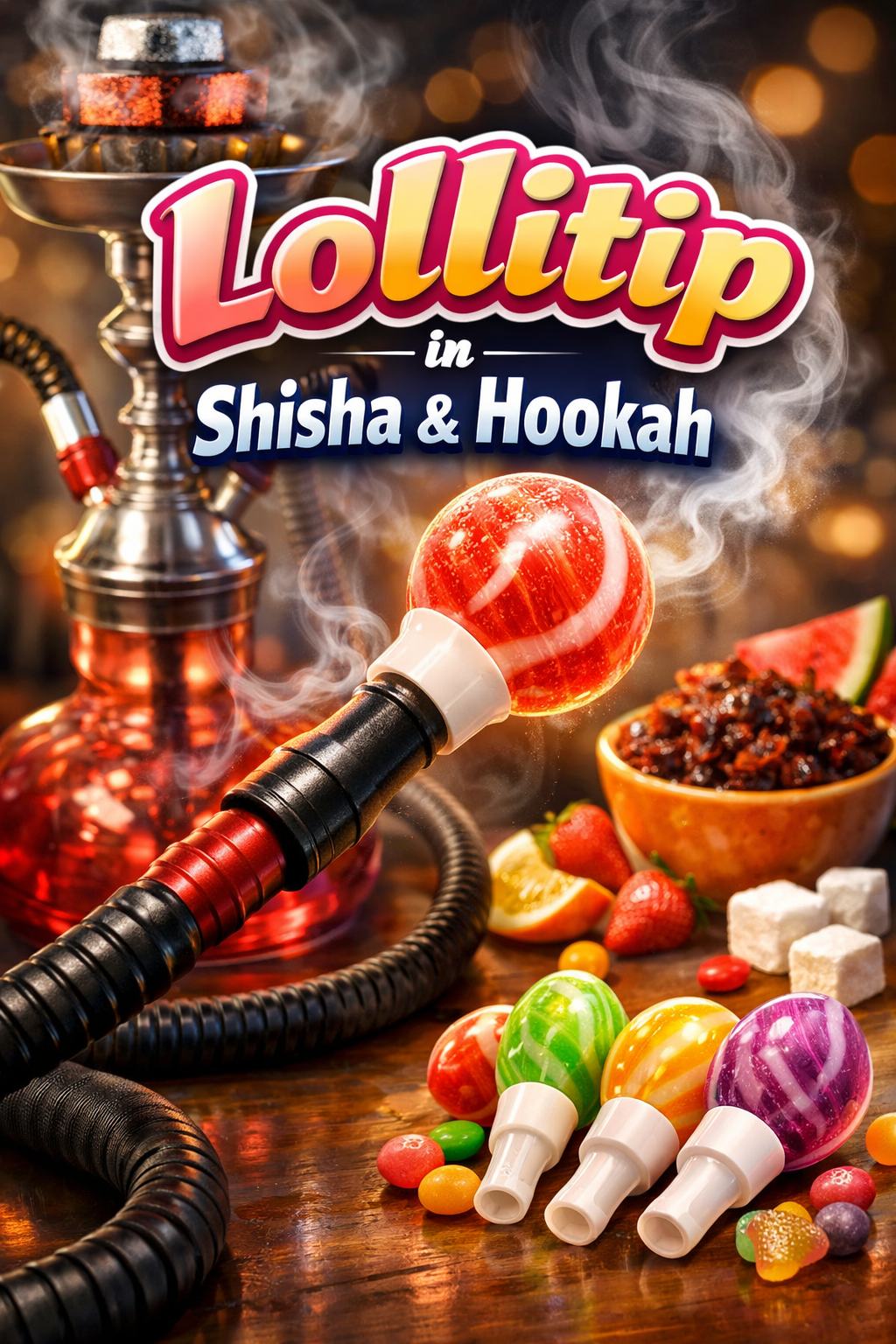
In the evolving world of shisha and hookah, a subtle yet impactful innovation is gaining attention: the lollitip. At its core, a lollitip in shisha refers to an advanced mouthpiece design—often rounded, textured, or ergonomically shaped—that enhances both hygiene and flavor delivery. Within the first few uses, smokers notice the difference: smoother draws, more controlled airflow, and a cleaner, more personalized experience.
Traditionally, hookah sessions have relied on simple disposable or reusable mouth tips. But as global hookah culture expands—from Middle Eastern cafés to urban lounges in Europe and Asia—consumer expectations are shifting. Users now demand not only richer flavors but also better hygiene and aesthetic appeal.
The lollitip concept reflects this shift. It transforms a functional accessory into an experience-enhancing component. In an environment where multiple people often share a single hookah, the importance of personal mouthpieces has grown significantly. Lollitip designs respond by offering improved grip, airflow control, and even subtle sensory enhancements.
As the global hookah market continues to grow, innovations like lollitip signal a broader transformation—one where tradition meets design, and where even the smallest components are reimagined for modern users.
The Evolution of Hookah Mouthpieces
Hookah, with roots tracing back several centuries in regions like Persia and India, has always evolved alongside cultural and technological shifts. Early hookah systems used simple wooden or metal stems with minimal attention to mouthpiece design.
By the late 20th century, disposable plastic tips became common, largely for hygiene reasons. These tips were inexpensive and functional but lacked refinement. They did little to enhance the smoking experience beyond basic sanitation.
The introduction of lollitip-style mouthpieces marks a new phase. These designs emphasize ergonomics, airflow precision, and aesthetic appeal. Unlike traditional tips, lollitips often feature contoured shapes that fit comfortably between the lips, reducing strain during longer sessions.
Hookah historian Dr. Karin van Nieuwkerk notes that the social nature of hookah has always driven innovation, particularly around shared use and hygiene. Lollitip builds on this legacy, addressing modern concerns while enhancing the sensory experience.
Design and Function: More Than Just a Tip
At first glance, a lollitip may appear to be a minor variation of a standard mouthpiece. In practice, its design significantly alters the smoking experience.
| Feature | Traditional Tip | Lollitip Design |
|---|---|---|
| Shape | Straight, uniform | Rounded, ergonomic |
| Material | Basic plastic | Silicone, polymer blends |
| Airflow Control | Minimal | Optimized channels |
| Grip Comfort | Limited | Enhanced, non-slip |
| Hygiene | Disposable or shared | Often personal, reusable |
The key innovation lies in airflow engineering. Lollitips often incorporate subtle internal grooves or widened openings that reduce resistance. This results in smoother draws and more consistent smoke density.
According to tobacco product researcher Dr. Alan Shihadeh, airflow dynamics play a crucial role in the delivery of smoke constituents and user satisfaction. By optimizing airflow, lollitips can subtly influence both flavor perception and overall comfort.
Hygiene in Shared Smoking Culture
One of the strongest drivers behind lollitip adoption is hygiene. Hookah is inherently social, often involving multiple users sharing the same hose. This raises concerns about the transmission of bacteria and viruses.
Traditional disposable tips addressed this issue to some extent, but they were often flimsy and inconsistently used. Lollitips improve on this by offering durable, personal mouthpieces that users can carry and reuse.
A study published in the Journal of Environmental Health highlighted the presence of microbial contamination in shared hookah components, emphasizing the importance of personal hygiene measures. Lollitips respond to this concern by encouraging personal ownership, using materials that are easier to sanitize, and providing a more secure fit.
Public health expert Dr. Wasim Maziak explains that reducing shared contact points is a critical step in minimizing health risks associated with hookah use.
Flavor Enhancement and Sensory Experience
Beyond hygiene, lollitips are also valued for their potential to enhance flavor perception. While they do not alter the tobacco itself, their design can influence how smoke is experienced.
| Factor | Impact on Experience |
|---|---|
| Airflow Smoothness | Reduces harshness |
| Tip Shape | Directs smoke flow |
| Material Composition | Neutral or cooling effect |
| Surface Texture | Affects lip comfort |
For example, silicone-based lollitips may provide a slight cooling sensation, subtly altering the perception of heat and flavor intensity. Wider openings can create denser smoke clouds, which many users associate with richer flavor.
Sensory scientist Charles Spence notes that the physical interface between product and user can significantly shape perception, even when the underlying substance remains unchanged.
Market Trends and Consumer Behavior
The rise of lollitip in hookah culture mirrors broader consumer trends. Today’s users are more informed, more selective, and more influenced by aesthetics and social media.
Hookah lounges and brands are increasingly incorporating premium accessories to differentiate themselves. Lollitips, with their distinctive shapes and colors, fit perfectly into this strategy.
Key market drivers include growing global hookah popularity, increased health awareness, demand for personalized accessories, and social media-driven aesthetics.
According to Euromonitor, the global shisha market continues to expand, particularly among younger urban consumers. These users often prioritize experience and customization over tradition alone.
Marketing analyst Sarah Collins observes that accessories like lollitips are becoming status symbols within hookah culture, similar to custom vape devices.
Materials and Manufacturing Innovation
Lollitips are typically made from advanced materials such as food-grade silicone, high-density polymers, or glass. Each material offers distinct advantages.
Silicone is flexible, durable, and easy to clean. Glass provides a premium feel and does not retain flavors. Polymer blends offer a balance between affordability and performance.
Manufacturing these tips requires precision molding to ensure consistent airflow and durability. Some high-end designs are even modular, allowing customization.
Engineer Dr. James Maxwell notes that material choice directly affects both user comfort and product longevity in repeated-use accessories.
Environmental Considerations
As sustainability becomes increasingly important, the shift from disposable to reusable lollitips carries environmental implications.
Traditional single-use plastic tips contribute significantly to waste, especially in busy hookah lounges. Reusable lollitips offer a potential solution, though they require consistent use and proper maintenance to deliver environmental benefits.
Challenges include cleaning requirements, higher production costs, and user adoption habits. Still, the move toward reusability aligns with broader sustainability goals across consumer products.
Environmental researcher Dr. Trucost emphasizes that reusability must be paired with consistent use to achieve meaningful environmental impact.
Cultural Significance and Modern Identity
Hookah has long been a symbol of social connection and cultural tradition. Lollitip enhances this identity rather than replacing it.
In modern urban settings, hookah culture blends tradition with innovation. Accessories like lollitips allow users to express individuality while participating in a shared ritual.
This balance between personal expression and communal experience is central to its appeal. As consumption becomes more experience-driven, even small design elements take on greater cultural meaning.
Anthropologist Sidney Mintz’s work on the cultural significance of consumption helps frame this shift, highlighting how products evolve alongside social practices.
Takeaways
- Lollitip is an innovative hookah mouthpiece designed for better hygiene and comfort.
- It enhances airflow, leading to smoother and more controlled smoking sessions.
- Personal use reduces health risks associated with shared hookah setups.
- Market demand is driven by younger, experience-focused consumers.
- Advanced materials improve durability and user experience.
- Sustainability benefits depend on consistent reuse and cleaning.
- It represents the fusion of tradition and modern design in hookah culture.
Conclusion
The lollitip may seem like a minor accessory, but it reflects a meaningful shift in how hookah is experienced today. By addressing hygiene concerns, improving comfort, and enhancing airflow, it elevates a centuries-old practice without altering its essence.
Its growing popularity underscores a broader trend: consumers are no longer satisfied with functionality alone. They seek products that offer personalization, aesthetics, and improved performance.
While challenges remain—particularly around cost and sustainability—the lollitip stands as a symbol of innovation within tradition. It shows that even the smallest elements of a cultural ritual can evolve, adapting to the expectations of a new generation while preserving the social spirit that defines hookah.
FAQs
What is a lollitip in hookah?
A lollitip is a redesigned mouthpiece that improves hygiene, airflow, and comfort during shisha sessions.
Is it better than a regular tip?
Many users prefer it for its ergonomic design and smoother airflow, though preference varies.
Can lollitips be reused?
Yes, most are designed for repeated use and can be cleaned easily.
Do they change the flavor of shisha?
They don’t alter the tobacco but can affect how smoke feels and is perceived.
Are they eco-friendly?
They can reduce waste if reused consistently instead of disposable tips.
APA References
Collins, S. (2022). Consumer behavior in modern smoking accessories. Journal of Marketing Trends, 14(2), 45–59.
Euromonitor International. (2023). Global tobacco and shisha market analysis. Retrieved from https://www.euromonitor.com
Kassem, N. O., et al. (2015). Hookah smoking and microbial contamination. Journal of Environmental Health, 77(10), 8–13.
Maxwell, J. (2021). Material science in consumer product design. Materials Today, 44, 120–128.
Maziak, W., Ward, K. D., Afifi Soweid, R. A., & Eissenberg, T. (2015). Tobacco smoking using a waterpipe: A re-emerging strain. Tobacco Control, 13(4), 327–333.
Shihadeh, A. (2003). Investigation of mainstream smoke aerosol of the argileh water pipe. Food and Chemical Toxicology, 41(1), 143–152.
Spence, C. (2015). Multisensory flavor perception. Cell, 161(1), 24–35. https://doi.org/10.1016/j.cell.2015.03.007
Trucost. (2019). Environmental impacts of consumer products. Retrieved from https://www.trucost.com
van Nieuwkerk, K. (2006). A trade like any other: Female singers and dancers in Egypt. University of Texas Press.
 admin
admin